 On Saturday last, Fr. R led us on a journey to Shenyang, China’s fourth largest city. We assembled at 5:15 am in front of our hotel and took taxis to the station. If you want to imagine a Chinese taxi, recall to mind the double-decker bus that takes Harry Potter to Hogwarts. On our return to the hotel late that night, our cabbie must have averaged 50 mph on city streets, running through three red lights and coming within six inches of other vehicles a dozen or more times, leaning on his horn the whole way. And he kept the change from 15 yuan when the fare was only 13.90 – a no-no, since there is no tipping in China. (Granted, we are quibbling about 16 cents.)
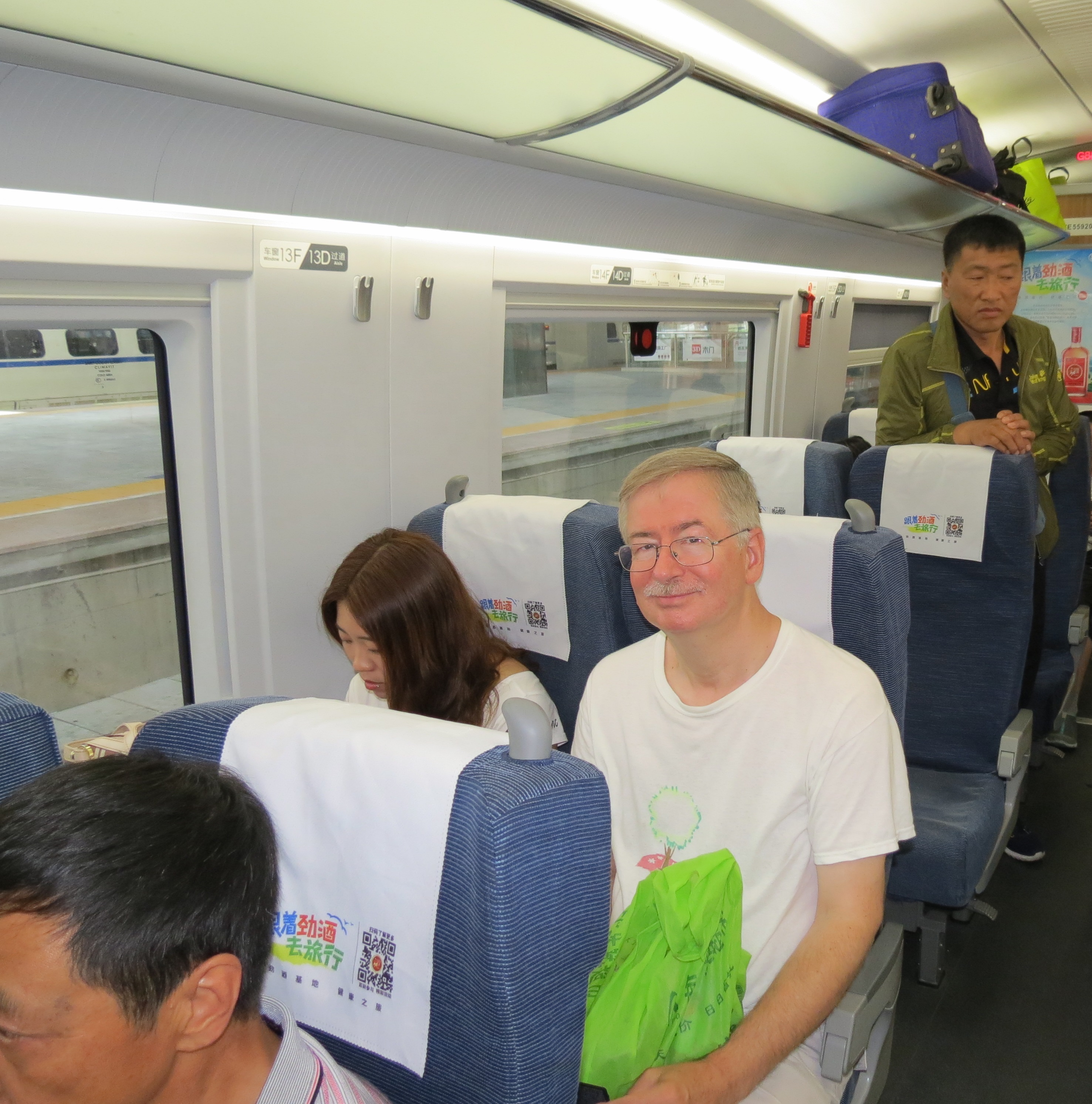 Taking the high-speed train (more than 200 mph) you can go from Jilin to Shenyang in less than two and a half hours. The trains are wonderful: spotlessly clean, comfortable, quiet, with nice restrooms. Since many of them travel very long distances there is usually a bar-car or dining car. Most of the countryside along the way resembles the land on either side of the Ohio River.
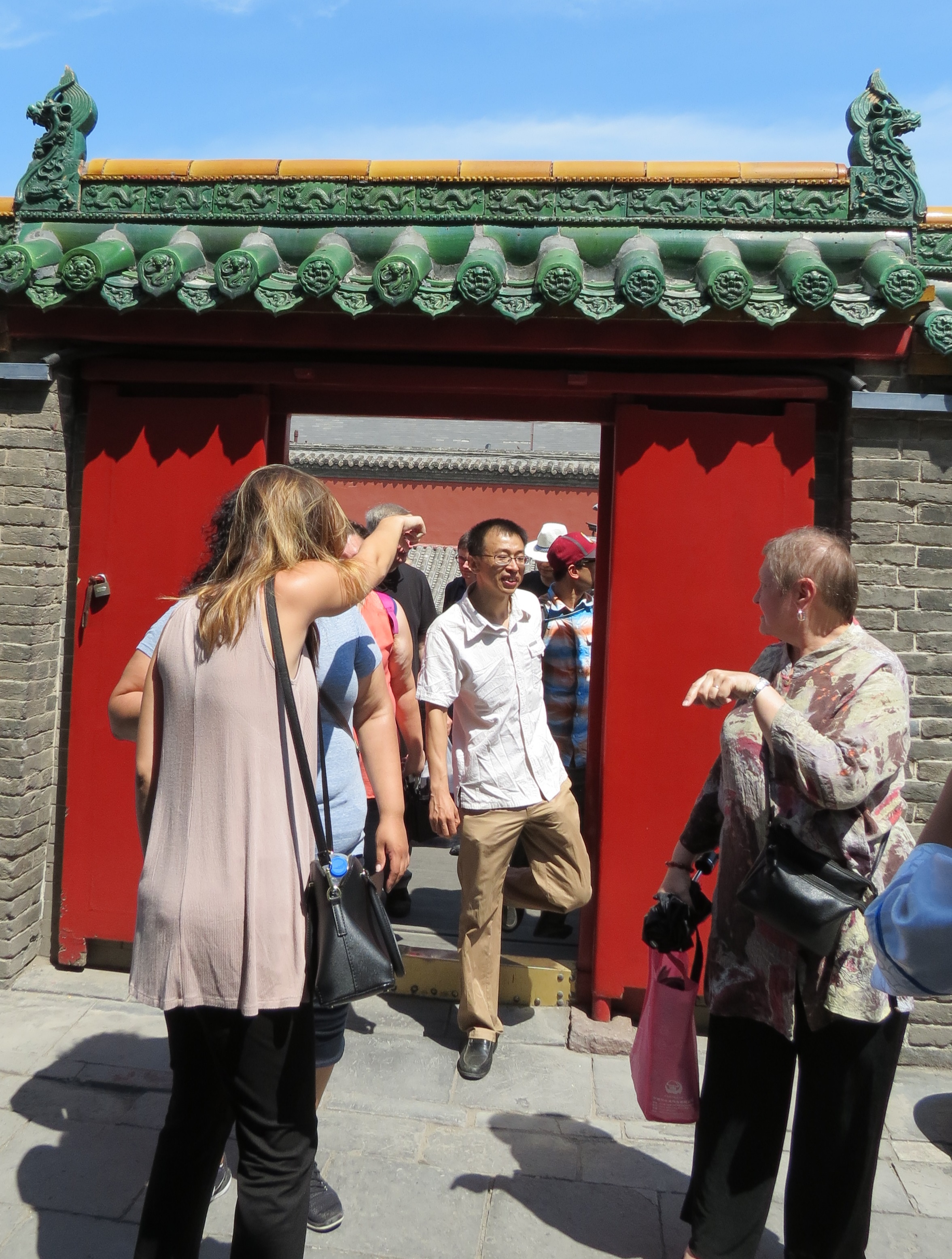
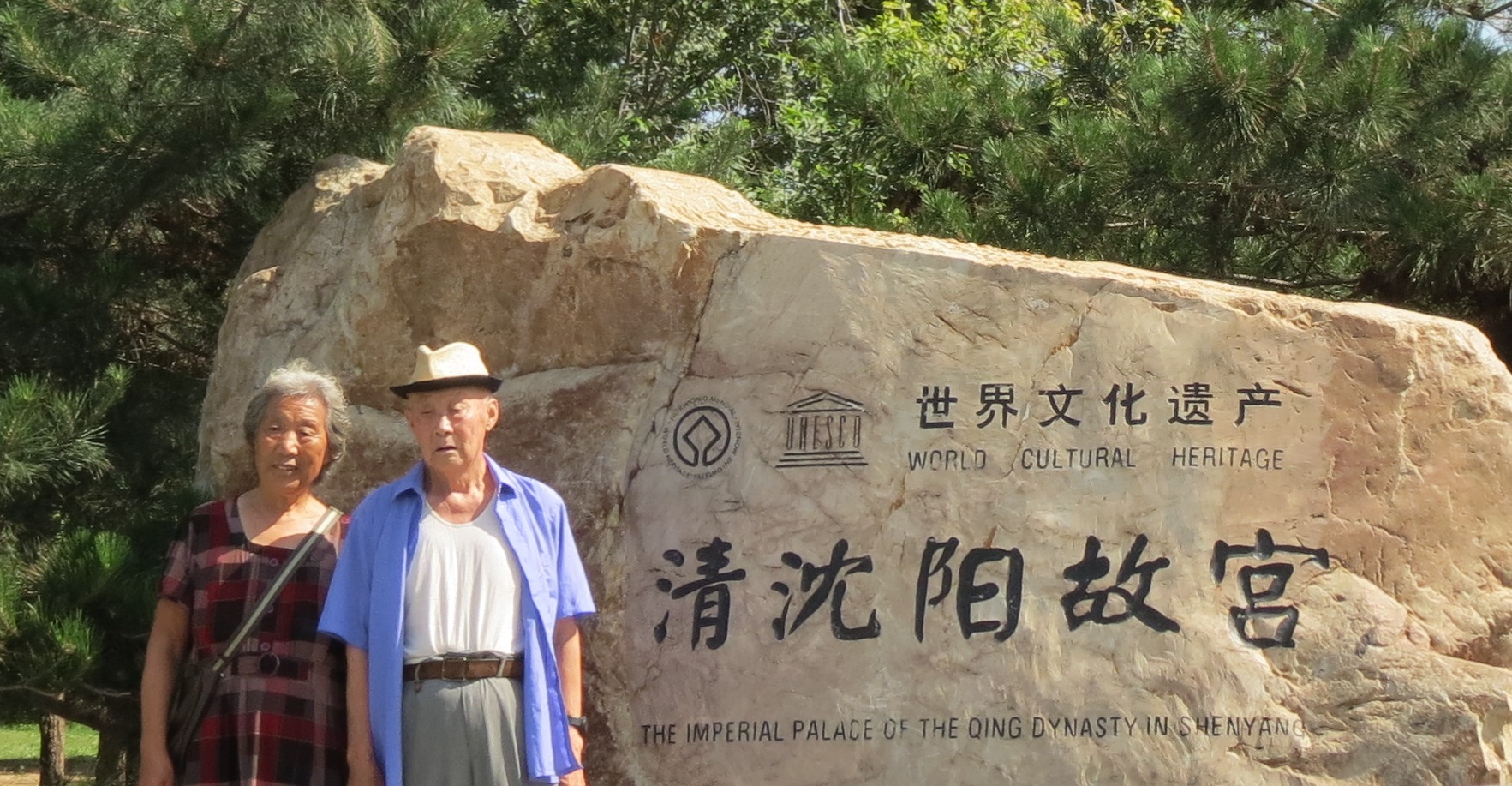
Once in Shenyang we met a Chinese friend of Fr. R, a postal worker called Frank. About ten years ago Frank noticed that there were so many people in Shenyang who sent packages to English-speaking countries that he decided he ought to learn English. Though self-taught, he speaks very well and knows all kinds of idioms and slang. Some years ago he accidentally encountered a Maryknoll priest and through him has made friends with many others, like Fr. R. Frank arranged for an English-speaking tour guide to take us around the imperial palace of Shenyang (built in the 1630s, rebuilt after fires in the 1740s). Originally, Shenyang was the capital of the Manchus, from northeast China. They intermarried with Mongols. When eventually the capital was moved to Beijing, Shenyang remained a place of religious importance.
This ties into something that Dr. D talked about that we need to remember and understand in connection with China, perhaps with most cultures of the Far East: traditionally the Crown was responsible for the practice of Religion. Whereas in Christian countries there was a priesthood which offered sacrifice (and the monarch endorsed it and led by example), in China only the king or emperor offered sacrifice. Since sacrifices were mostly offered to the spirits of the ancestors, the monarchs would have to return to the place (Shenyang) where the ancestors had lived and were entombed. Usually this took place two or more times a year.
Our tour guide was quite knowledgeable but her accent was one of the worst I have heard here. Mandarin syllables nearly always end in a vowel (occasionally in an “n” or “ng”), consequently it is difficult for Mandarin speakers to handle English words that end in consonants. King becomes “king-ah”, sacrifice becomes “sa-ca-ri-fi-suh”. (Think of Jar-Jar Binks.) Spoken rapidly this is very hard to follow, especially when the speaker has a sophisticated vocabulary.
So many cultural treasures having been destroyed or abandoned during the Cultural Revolution, I was surprised that the palace grounds are largely intact. And anything not in good condition is being rebuilt or renovated. The original kitchen/cooking area has been replaced by a modern supermarket, but that seams to be the only major loss.
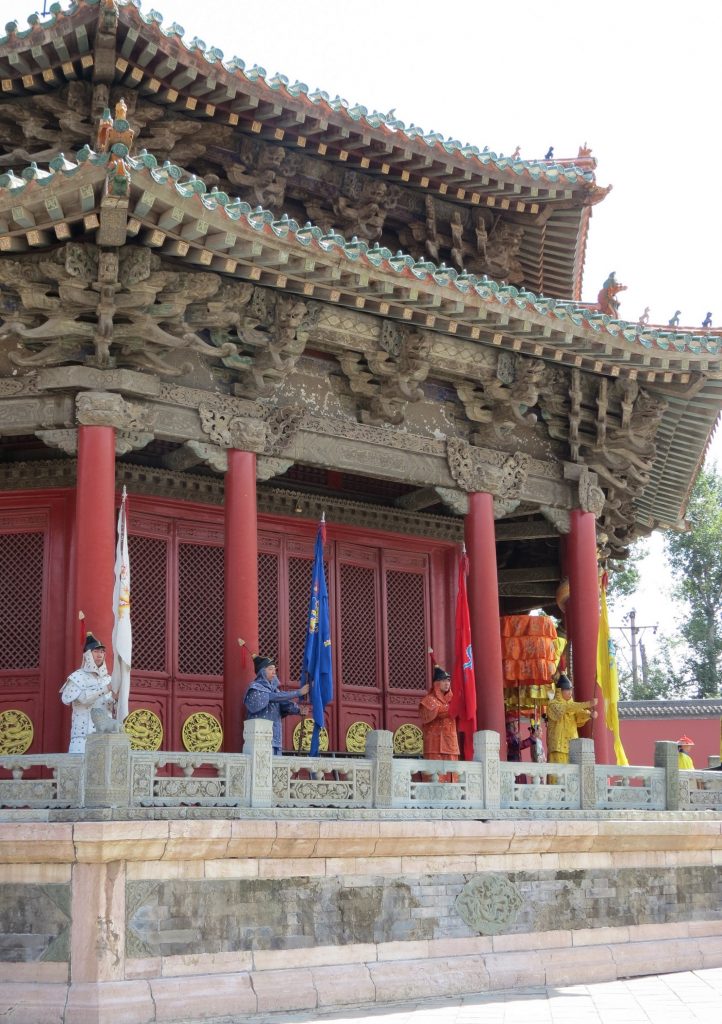
Nearly all the buildings are stone, surmounted by wood. Roofs are tiled, mostly in green and gold (the royal color). the corners of the roofs turn upwards, just as we remember from our fairy tale books, and a collection of fanciful animals guards each. Here, there seems to always be a dragon, often an ox, made of yellow-glazed terra cotta.
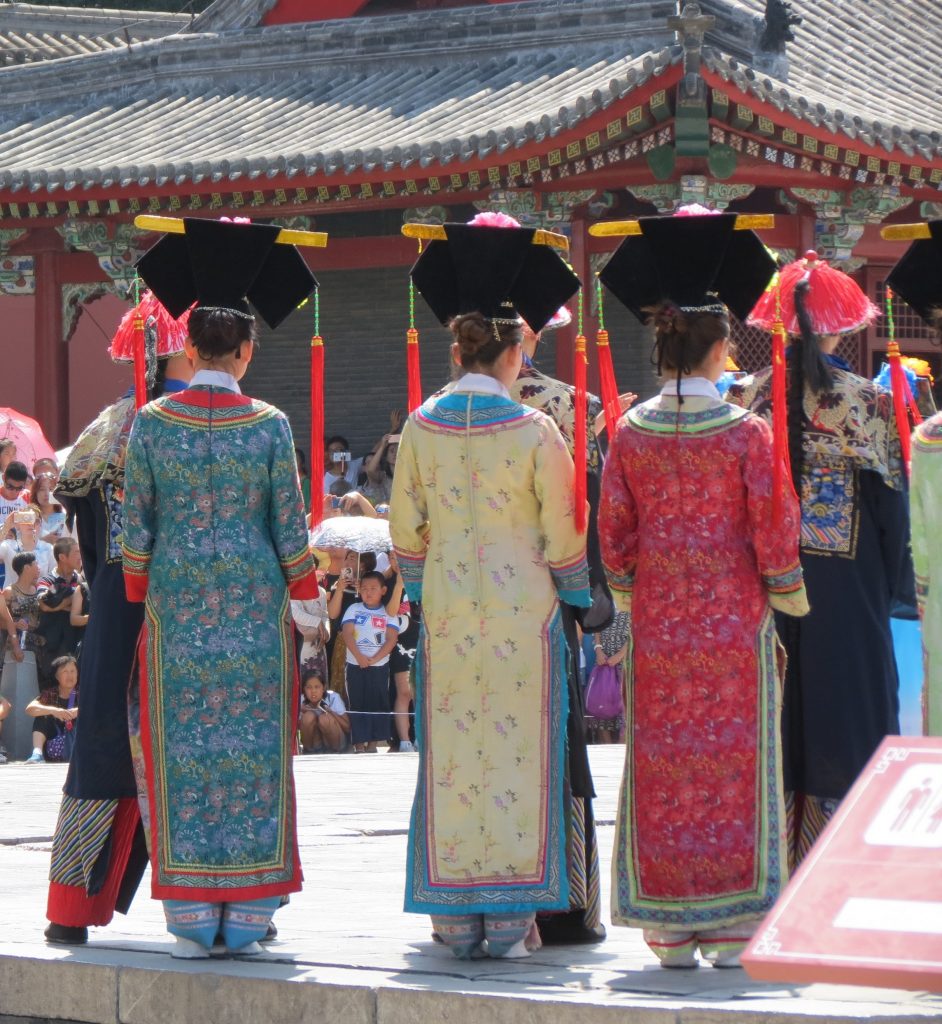 There is a grand open space lined by small pavilions for ministers of various ranks and purposes and culminating in a great circular building in which the king or emperor would hold court and greet visitors. While we were there they mounted two performances re-enacting such a ceremony – very pretty costumes, some dances, and some clearly stylized forms of verbal address (as we might find at the opening of court or of Congress).
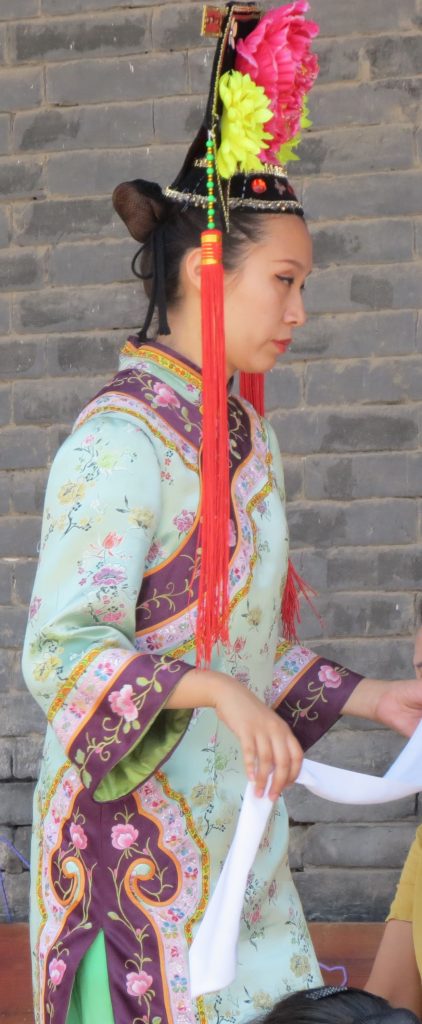 The king did not have quarters of his own! He did, however, have five Mongol wives, each of whom had a pavilion (with one large, one small room) and he slept where he liked. He also had a dozen or so Manchu concubines, who lived four to a house just outside the perimeter of the wives’ homes.
Like homes in Korea (a similar climate) the palace used a form of undol heating: a fire is kindled just outside and under the exterior wall of the building (the foundation of which is granite). The smoke from the fire is drawn under the floors of the building, so if you are lying or sitting on the floor you can get pretty cozy. One giant chimney serves for the drawing off of smoke from all twelve or more buildings.
Unlike the Korean palaces or old-style homes that I’ve seen, the palace at Shenyang seems frankly uncomfortable. There are wide wooden benches/beds and 20-foot intricately painted ceilings. But no sumptuousness. Of course, I suppose we could ssay the same about any place inhabited by Oliver Cromwell or William and Mary…or our own Colonial forebears. At least the Chinese had “central heat” and good ventilation.
Most disappointingly, so much of Shenyang palace seemed either dirty or neglected. As I mentioned, large parts of it are undergoing restorative work. But so much beautifully carved wood is covered with decades of dirt, so many surfaces show only a trace of color where their Korean counterparts would be reveling in bright greens and blues and scarlets and whites.
Perhaps we’d best come back in five years or so. Then, it will be a showplace.
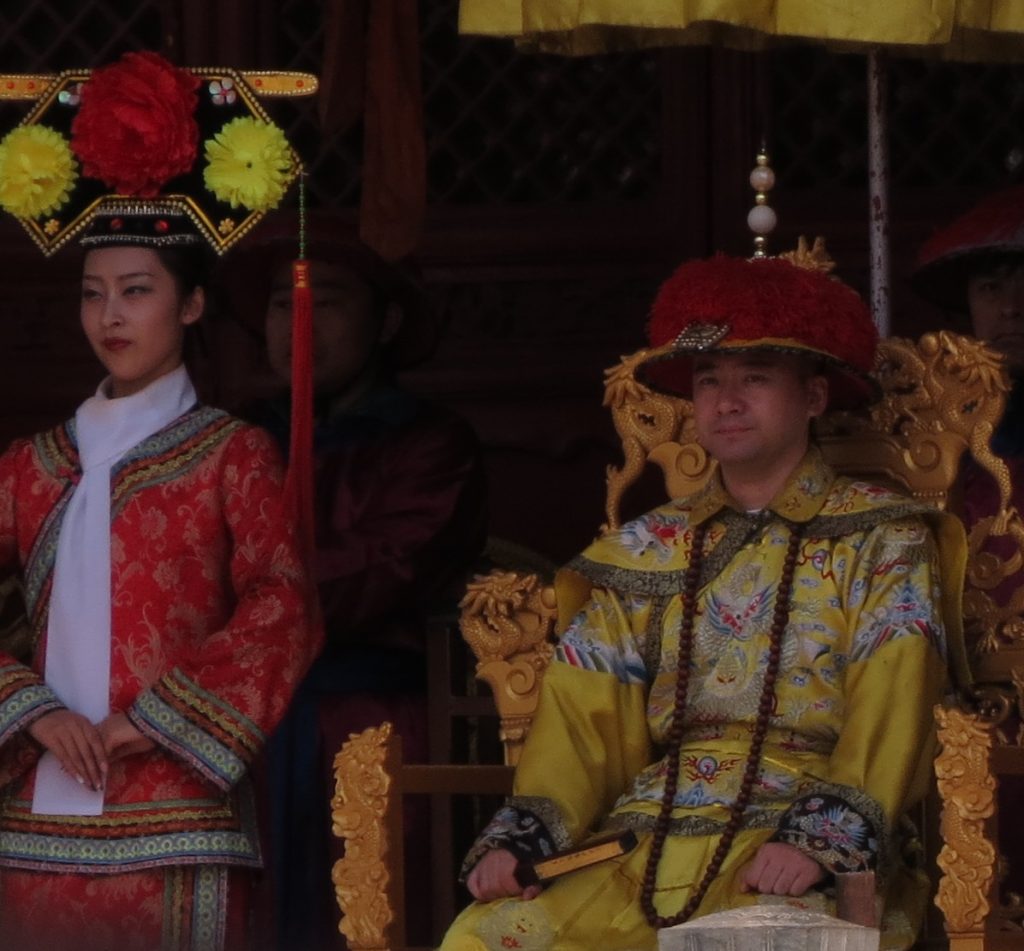
Fit for a king, to coin a phrase….


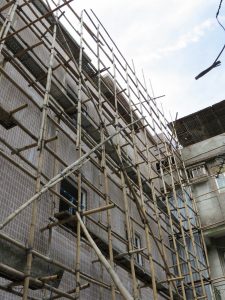 Safety as we know it in litigious America doesn’t exist here. We were shocked in 1983 to see Hong Kong workmen seven stories up a building, climbing on scaffolds made of bamboo poles lashed together with hempen or nylon twine. Thirty-four years later…they’re still doing it.
 Mr. P, one of our younger teachers, told me of the great success he had with his class: each student had to write his own eulogy, then choose another student to deliver it while the “deceased” lay on a bier (three desks pushed together) and the rest of the class served as mourners! He said they were all very enthusiastic – in one case the dead man decided to read the eulogy himself. While I think this is a good assignment as regards writing, speaking, and thinking about oneself and one’s life, I would definitely have hesitated before implementing it, especially in a situation like Jilin where I’m not that familiar with the culture or with the home life of my students.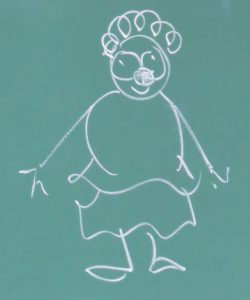
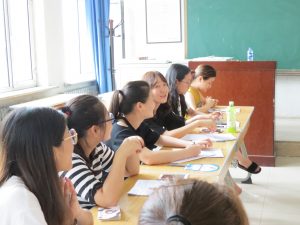 When we reconvened, it was their turn to do Two Truths and a Lie. Nearly everyone seemed eager to talk. Unlike Class 5, these students don’t seem to need each other’s presence for moral support when standing in front of the entire class. This is probably due to Mr. G assigning them job interviews and such as speaking exercises when he had them earlier in the week.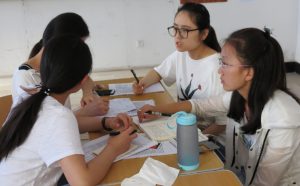
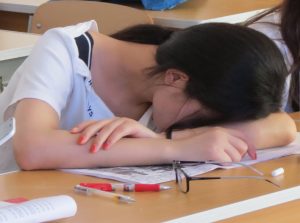
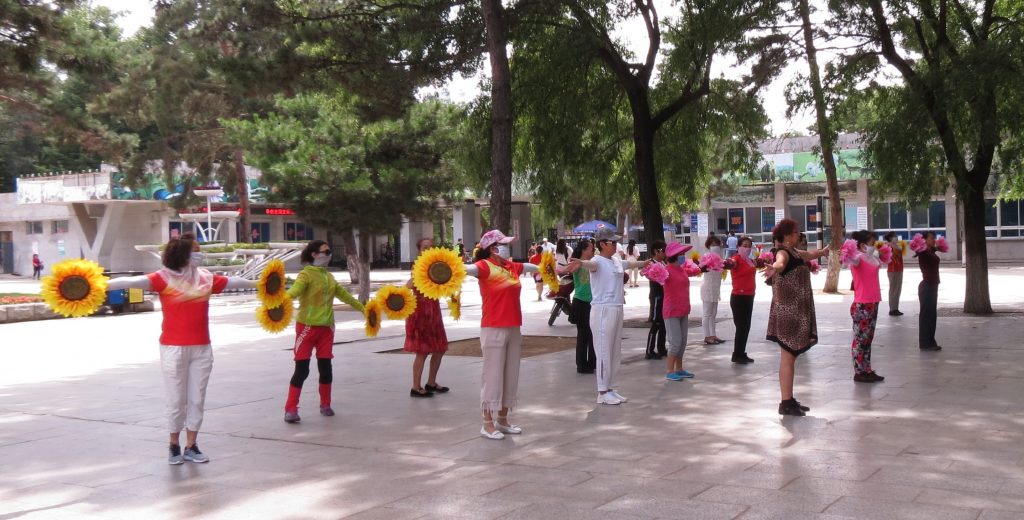
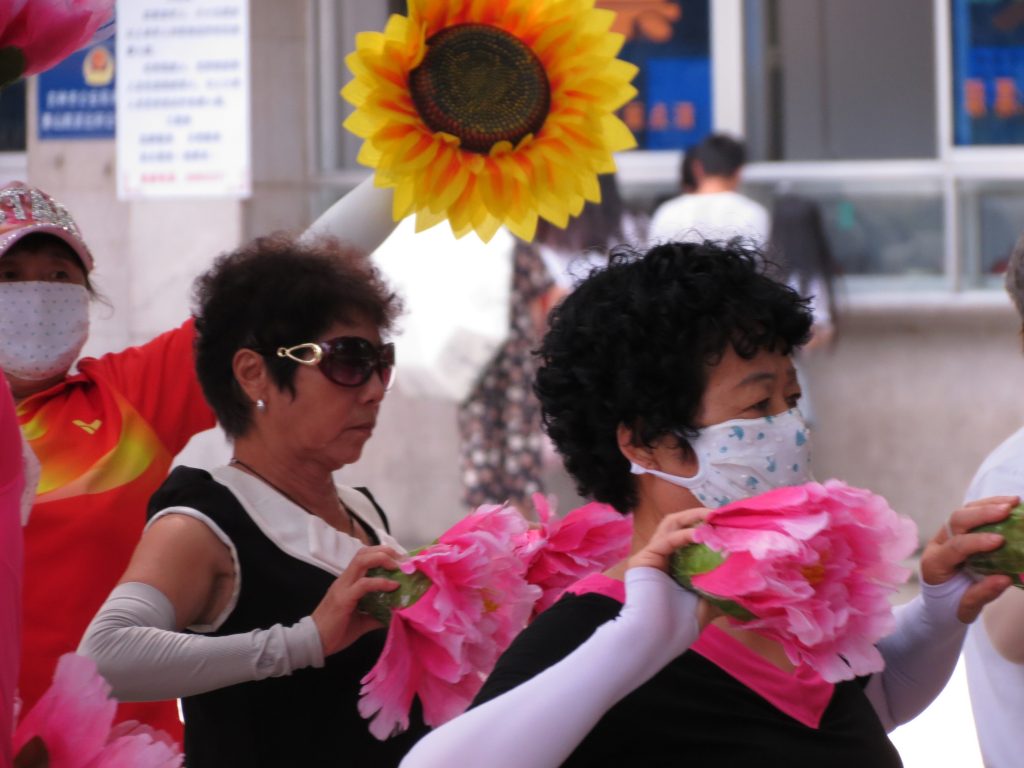 I commented to my students that these ladies must have colds and are being careful not to make others sick but I was quickly corrected: they cover their faces so as not to get sun-tanned.
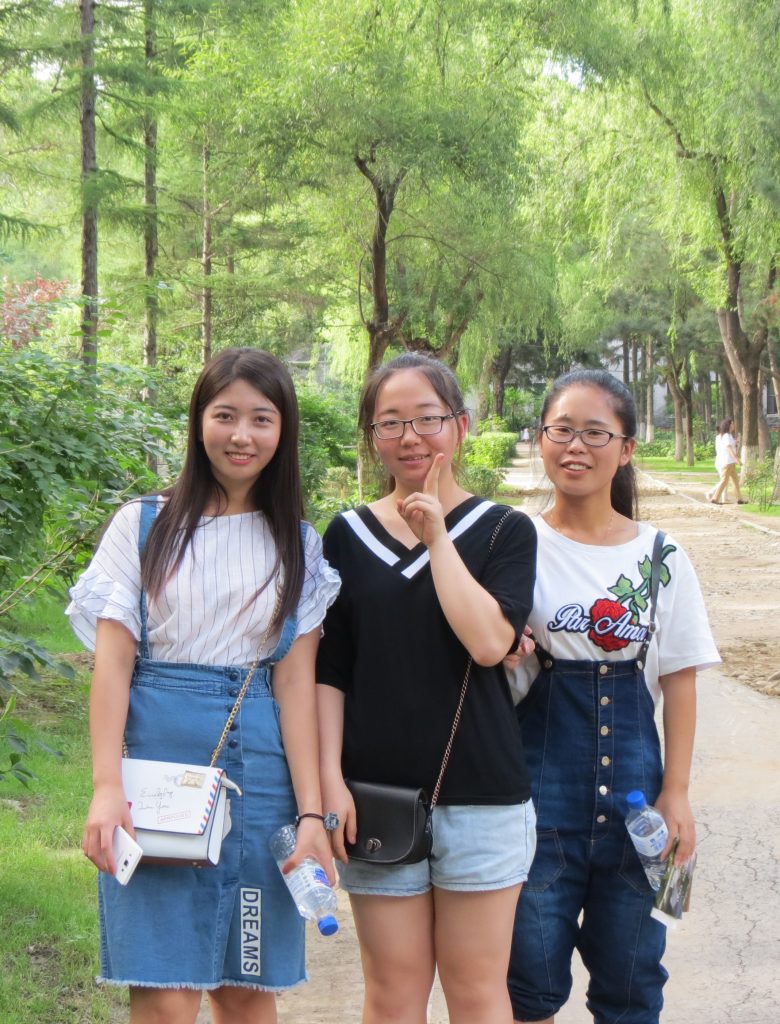 The park was beautiful – shady and cool, with lovely flowers (all in pots!). It includes long walkways, grassy and forested areas, a small amusement park with a Ferris wheel, bumper cars and such, and even a little zoo with lions, tigers, llamas, a leopard, wallabies, seals, and raccoons. This last reminded me of when I was very young and visited the Bronx Zoo in New York. In those days a zoo was a place where people could look at animals. Today, American zoos are centers of conservation…and by the way, people can come see the animals. Jilin’s Zoo is like the Bronx Zoo of my childhood: cages and water dishes, and not much in the way of “habitat”.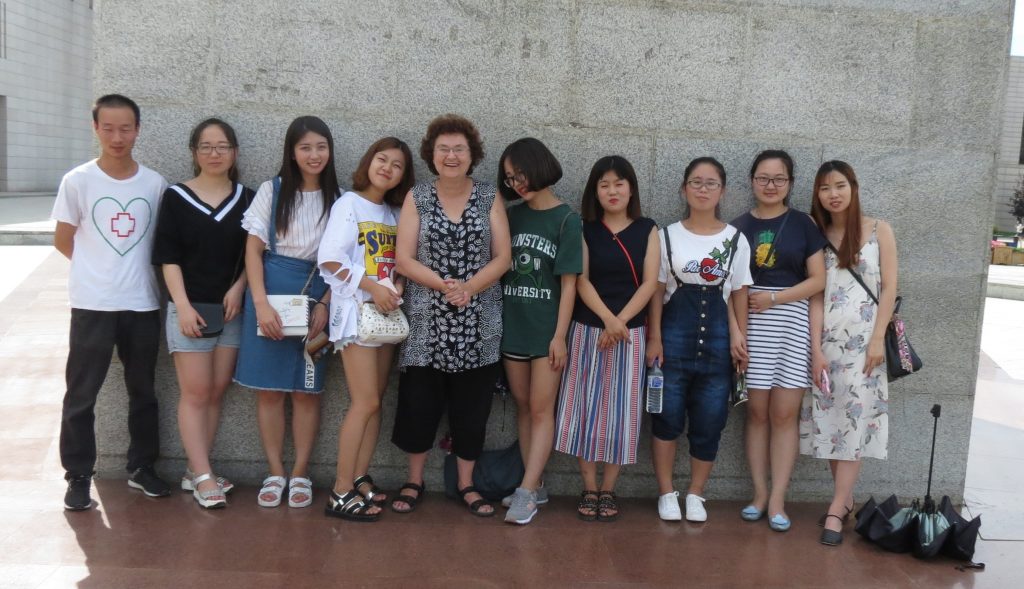
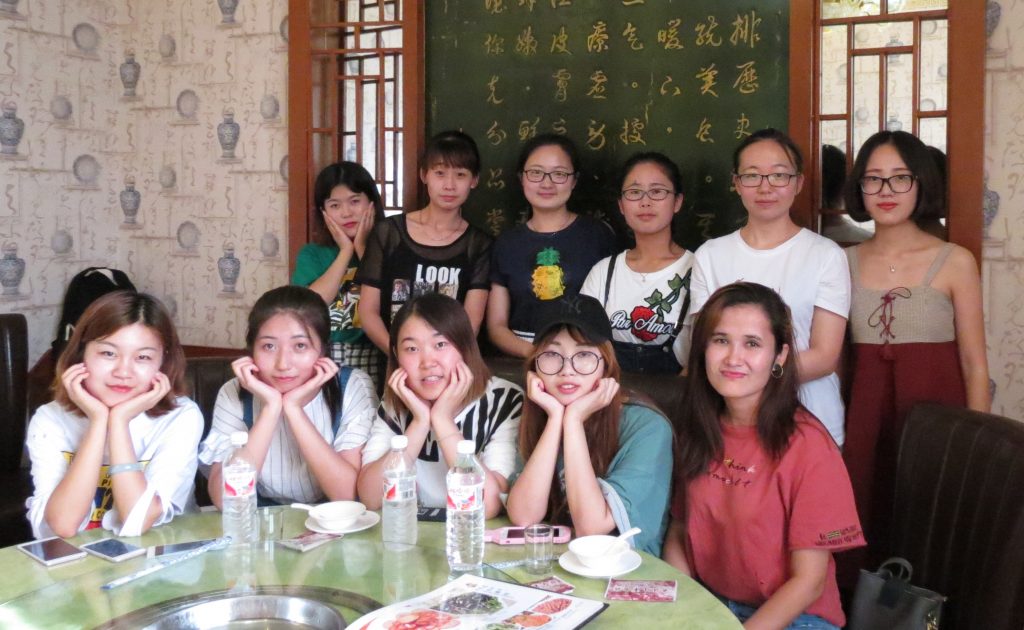
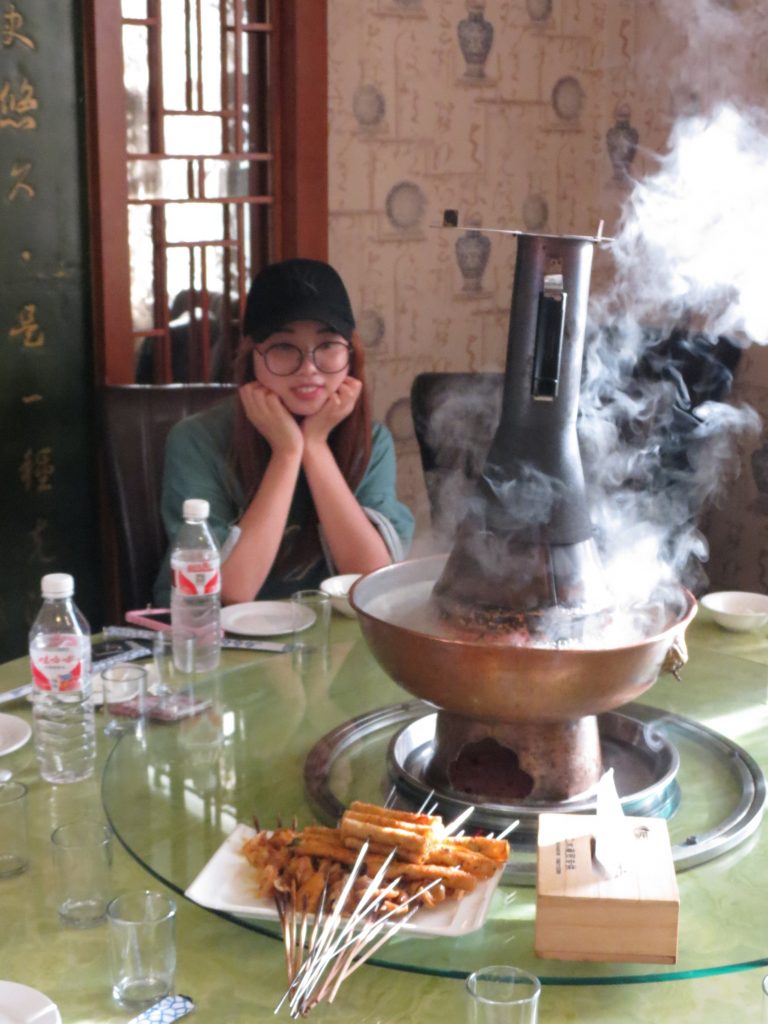 The specialty of the region is called Hotpot, and consists of some kind of broth or seasoned water brought to a boil in a shallow pan at your table. Then various meats, noodles, and vegetables are brought and you drop them in and take them out as you fancy. The students also ordered some kind of cold noodle and soup concoction that was surprisingly good, some very spicy kimchee-like veggies, and “char” — which is meat, fish cakes, or egg-roll-like foods that have been grilled on skewers. Two students ran to the nearest grocer to bring a 2.5 liter bottle of Seven-Up (the restaurant doesn’t mind if you bring in drinks).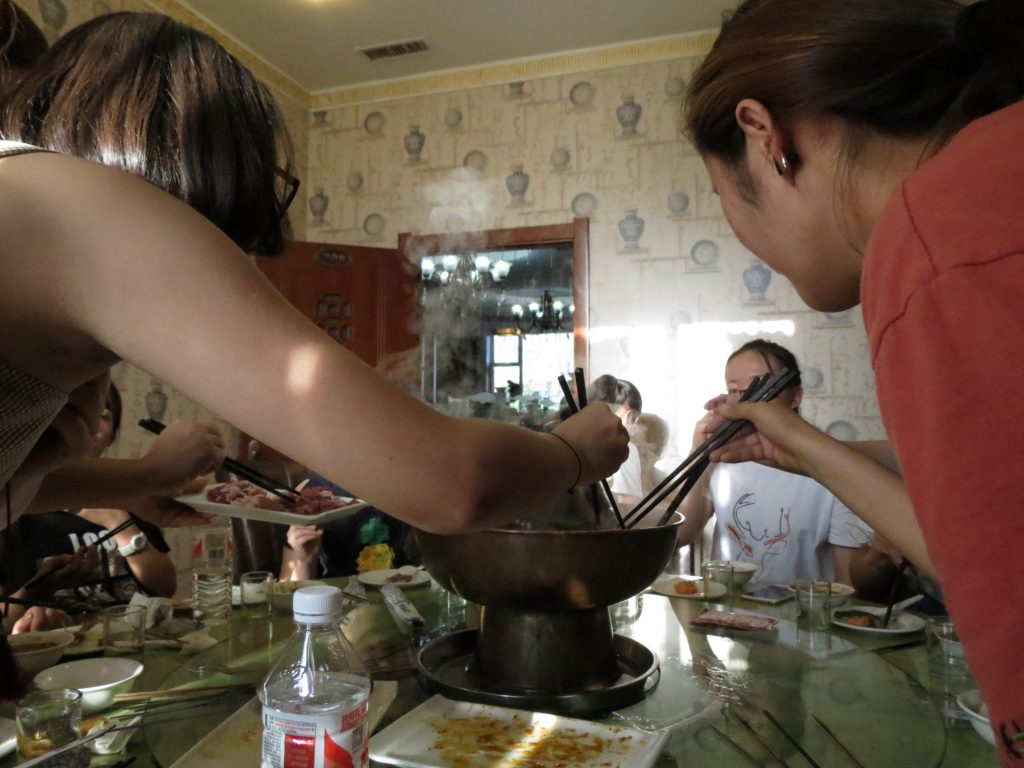
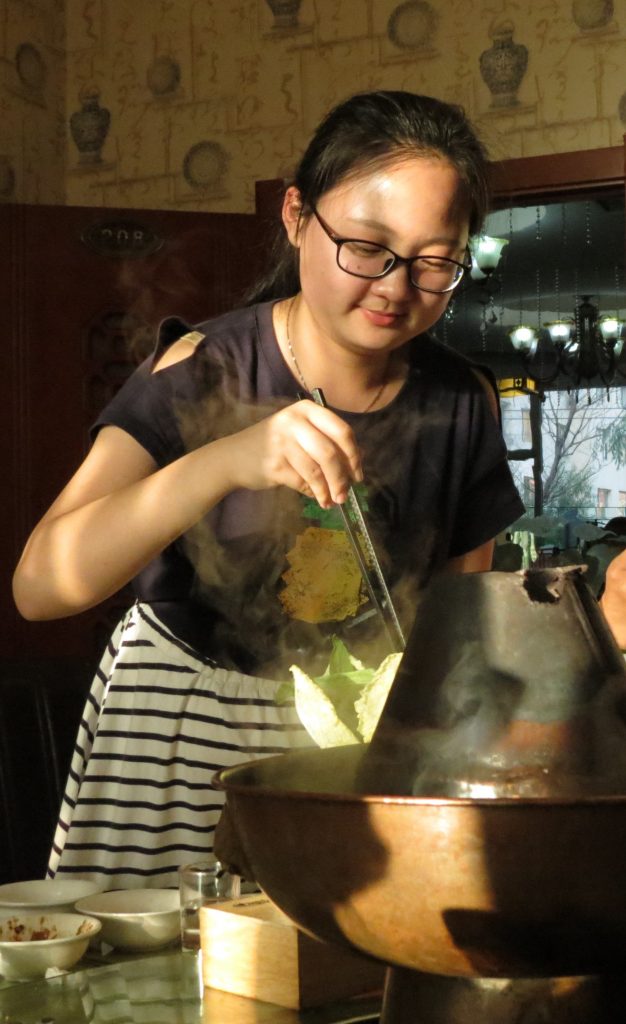 It was quite a merry little party, to which I was not permitted to contribute anything but my presence and my admiration. This generosity is typical of Jilin students and, in my experience, of everyone we have met in Maryknoll, the university, and the hotel.
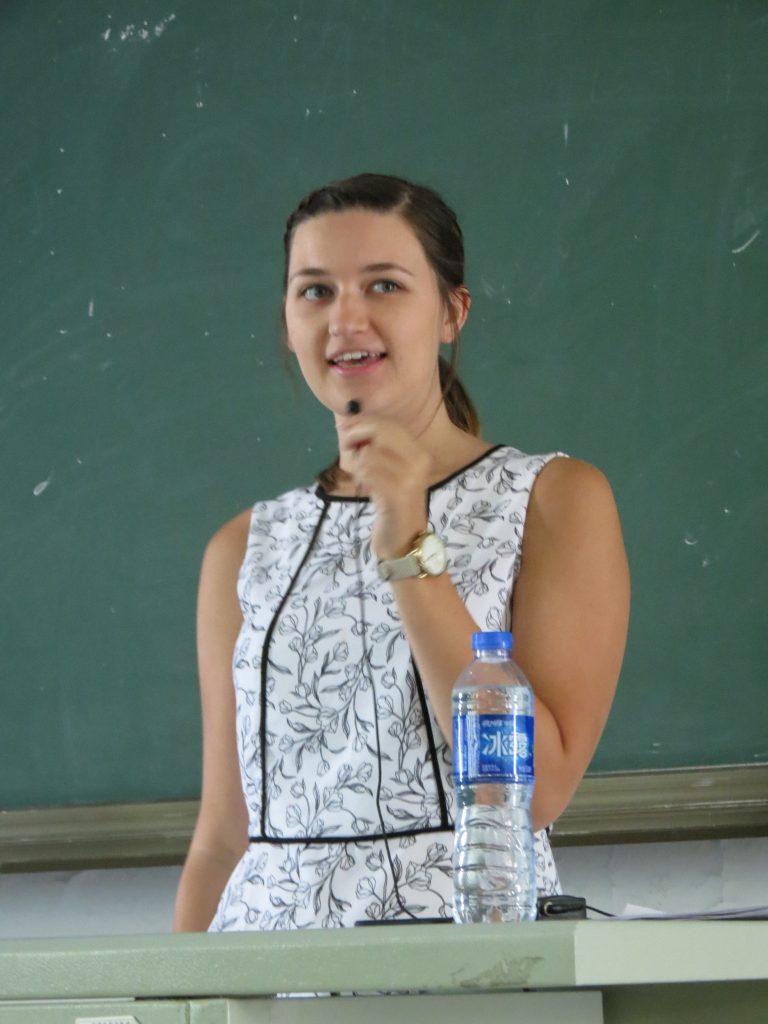 On Day 2 Ms. E presented a China Daily story about the surplus of men in China – more than 33,000,000 more men than women. This is one of the unfortunate results of the One Child Policy, instituted about a generation ago (and now significantly relaxed). For a young lady not yet out of college, Ms. E was impressive: I’ve seen many seasoned teachers who could not address an audience so masterfully.
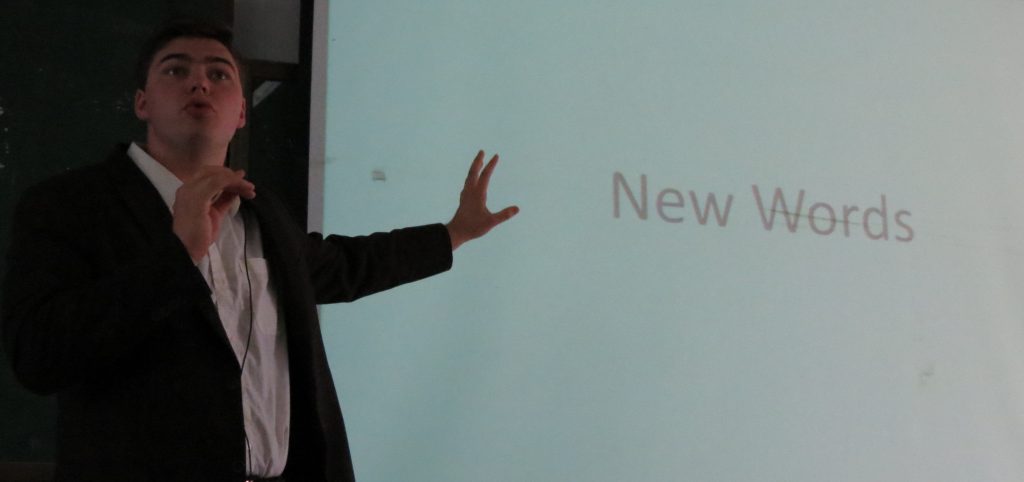
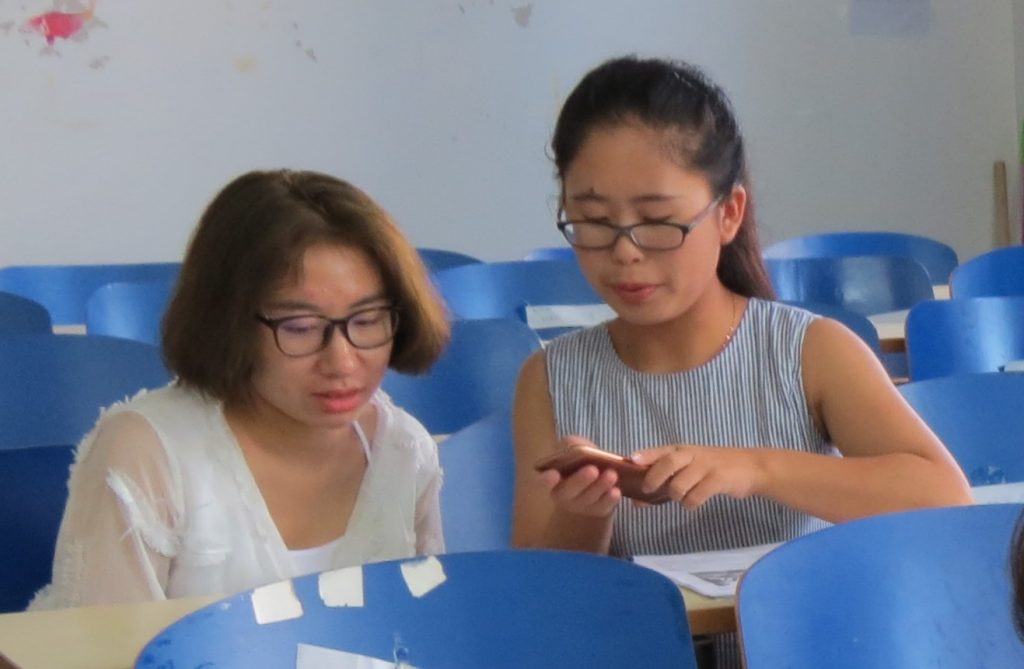 Since this particular article is rather lengthy, we did not read it aloud but moved straight to discussion. I divided the class into four groups (using the Uno cards) and assigned each group a question to talk about amongst themselves and report on to the entire class, giving them about 25 minutes. Since the speaking ability of this group is sometimes very limited, and since it is very early in the program, I permitted them to talk to each other in Chinese and to write down in English, and then read, what they wanted to report. I probably will not permit this with the last two groups I will teach.